Back Pain
Lower back pain exercises
Source: NHS
In this topic (9)
There are some simple back exercises and stretches you can do at home to help ease lower back pain and improve your strength and flexibility.
Aim to do these exercises every day, along with other activities like walking, swimming or yoga.
Your pain should start to ease within 2 weeks and will usually pass in about 4 to 6 weeks.
See a GP if:
- your pain doesn't improve within a few weeks
- you experience severe pain while trying any of these exercises
Bottom to heels stretch
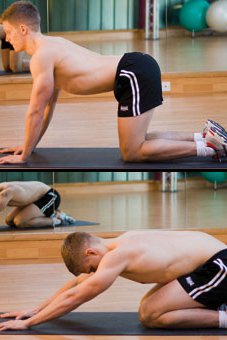
Start position: Kneel on all fours, with your knees under your hips and hands under your shoulders. Try to keep your back and neck fairly straight, and don't lock your elbows.
Action: Slowly move your bottom back towards your heels. Hold the stretch for one deep breath and return to the starting position.
Repeat 8 to 10 times.
Tips:
- avoid going right back onto your heels if you have a knee problem
- ensure correct positioning with the help of a mirror
- only stretch as far as feels comfortable
Knee rolls
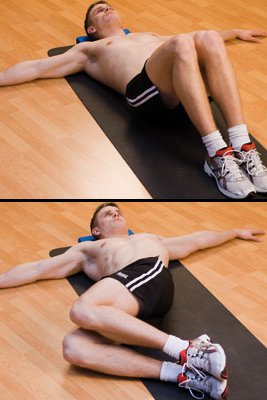
Start position: Lie on your back. Place a small flat cushion or book under your head. Keep your knees bent and together. Keep your upper body relaxed and your chin gently tucked in.
Action: Roll your knees to one side, keeping both shoulders on the floor. Hold the stretch for one deep breath and return to the starting position.
Repeat 8 to 10 times, alternating sides.
Tips:
- only move as far as feels comfortable
- place a pillow between your knees for comfort
Back extensions
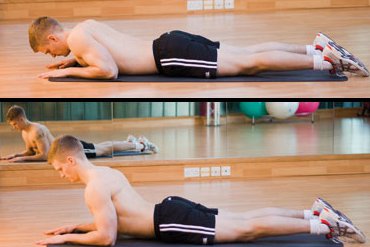
Start position: Lie on your front and rest on your forearms, with your elbows bent at your sides. Look towards the floor and keep your neck straight.
Action: Keeping your neck straight, arch your back up by pushing down on your hands. You should feel a gentle stretch in the stomach muscles. Breathe and hold for 5 to 10 seconds. Return to the starting position.
Repeat 8 to 10 times.
Tips:
- don't bend your neck backwards
- keep your hips on the floor
Deep abdominal strengthening
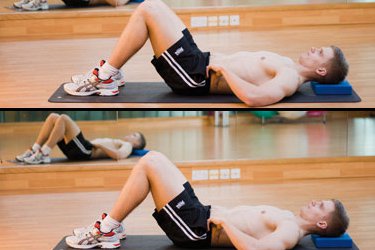
Start position: Lie on your back. Place a small, flat cushion or book under your head. Bend your knees, keeping your feet straight and hip-width apart. Keep your upper body relaxed and your chin gently tucked in.
Action: As you breathe out, gently tense the muscles in your pelvis and lower tummy so they're pulled up towards your chest. Hold for 5 to 10 breaths and relax.
Repeat 5 times.
Tips:
- this is a slow, gentle exercise – don't try to tense your muscles too quickly or too hard
- make sure you don't tense up through the neck, shoulders or legs
Pelvic tilts
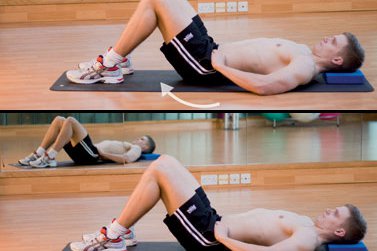
Start position: Lie on your back. Place a small, flat cushion or book under your head. Bend your knees, keeping your feet straight and hip-width apart. Keep your upper body relaxed and your chin gently tucked in.
Action: Gently flatten your lower back into the floor and tense your stomach muscles. Now tilt your pelvis towards your heels until you feel a gentle arch in your lower back and return to the starting position.
Repeat 10 to 15 times, tilting your pelvis back and forth in a slow rocking motion.
Tips:
- don't press down through your neck, shoulders or feet
- place one hand on your stomach and the other under your lower back – if you're doing the exercise correctly, you should feel the muscles working in these areas
Articles for Back Pain
"I can continue going about my daily life."
Kiran Mohan tells his story about his struggle with back pain. "My back problems started in 1999 when I developed a severe pain in the heel of one of my feet, which gradually progressed to the other foot." he says.
"I've picked up my life again."
Back pain was agony for Anne Parker from Berkshire, but thanks to the right diagnosis shes now walking tall. My bad back started 12 years ago with pains in my right buttock. When I saw my GP, he said the problem was actually my back,and he gave me painkillers.
Causes
Your back is a complex structure made up of bones, muscles, nerves and joints. This can often make it difficult to pinpoint the exact cause of the pain.
Diagnosis
Most cases of back pain do not require medical attention and can be treated with over-the-counter painkillers and self-care. However, you should visit your GP if you are worried about your condition or struggling to cope with the pain.
Introduction
Back pain is a common problem that affects most people at some point in their life. It may be triggered by bad posture while sitting or standing, bending awkwardly, or lifting incorrectly.
Lower back pain exercises
There are some simple back exercises and stretches you can do at home to help ease lower back pain and improve your strength and flexibility.
Prevention
Keeping your back strong and supple is the best way to avoid getting back pain. Regular exercise, maintaining good posture and lifting correctly will all help. How you sit, stand and lie down can have an important effect on your back.
Symptoms
You should seek urgent medical help if you have back pain and a high temperature (fever), unexplained weight loss, a swelling or a deformity in your back, it's constant and doesn't ease after lying down, etc.
Treatment
Treatments for back pain vary depending on how long you have had the pain, how severe it is, and your individual needs and preferences. Initially, back pain is usually treated with over-the-counter painkillers and home treatments.